Showing posts with label Vino Nobile di Montepulciano. Show all posts

Tuesday, January 14, 2014

Old School, New Tricks: Avignonesi

By Eric Guido

The name Avignonesi has always been synonymous with Vino Nobile di Montepulciano. In fact, they were one the pioneers of the DOCG, and a winery that has been producing wines from the region since 1984. However, up until recently, it was only the Vin Santo that really made it onto my radar (and a truly amazing Vin Santo it is). For the longest time, Avignonesi Vino Nobile fell into a bracket of wines that I didn't appreciate: namely, wines that were unidentifiable as Sangiovese-based wines. There's no question why I felt this way, especially with the blending regulations of the DOCG permitting up to 30% other varieties into the wine.

Courtesy of Wine Folly
"Guide to Sangiovese"
Sangiovese is a finicky grape that takes a lot of work to get it right. Once you've put all of the effort into growing and vinifying Sangiovese--to add 30% Cabernet, Merlot or Syrah, which will overwhelm and eliminate nearly all of the grapes inherent traits--is, in my opinion, a waste. There are many wine makers that will battle against the idea of a pure Sangiovese based wine (too hard to get right and keep balanced) and I too have enjoyed many Chianti that were blended with small amounts of other local varieties. But when a winery gets it right, pure Sangiovese can be a thing of beauty. Avignonesi has now joined the ranks of those daring vintners that have decided to make a true 100% Sangiovese-based Vino Nobile di Montepulciano--and I couldn't be happier.


Virginie Sayerys of Avignonesi
So what's changed, besides the blending? The fact is that the changes at Avignonesi go right to the core. In 2009, the company was bought by silent partner, Virginie Sayerys. Virginie, Belgium by birth and a lawyer before getting into the wine business, took her own beliefs in natural living, and then applied them to the production at Avignonesi. The winery is soon to be certified organic, along with many biodynamic principals, which have been adopted. Her focus on Sangiovese and terroir has brought a new elegance and balance to the entire range, while maintaining traditional Tuscan qualities. 2010 was the first Vino Nobile to be 100% Sangiovese, and the second I tasted it, I smiled from ear to ear. Frankly, to taste a wine like this, from a winery with such a large production (750,000 bottles a year), is a breath of fresh air.

The formidable Desiderio 85% Merlot / 15% Cabernet
& the dark classic;
 Grifi 60% Sangiovese / 40% Cabernet
Having loved the 2010 so much, I knew I had to explore the rest of their range, and the other day I finally got my chance. I was able to work through the core wines of the Avignonesi portfolio. To say I was impressed would be an understatement. A standout among them was the 2011 Avignonesi Rosso, which is an incredible value at a retail of $19. The 2011 Vino Nobile was intense and a great follow-up to the 2010. This was also the first chance I had to taste the Desiderio and Grifi. These were all great wines, but I would strongly urge readers to look at the Rosso and Vino Nobile. In a world where we pay $50 - $100 for the average Brunello, a 100% Sangiovese-based Vino Nobile can be a strong contender, and at $30 retail, a no brainier.

On to the wines:

2011 Avignonesi Rosso di Montepulciano (94% Sangiovese / 6% local varieties) – The nose showed ripe wild berry, sweet spice, hints of crushed blackberry, violet floral tones, and a hint of animal musk. On the palate, it was juicy with dark red fruits, yet soft and velvety, giving way to earth and spice with a vibrant acidity, which kept the mouth watering. The finish was impressive for its persistence as red berry, undergrowth and soil lingered on. The Avignonesi Rosso was a pleasant surprise, not overdone, yet fun with enough depth to keep it interesting throughout. (90 points) Find it on Wine-Searcher!

2011 Avignonesi Vino Nobile di Montepulciano (100% Sangiovese) – The nose alone was intoxicating with perfumed dark-red fruits, sweet Tuscan spice, violet floral notes, and the slightest touch of oak. On the palate, it was intense and robust, with concentrated dark red fruits, balsamic notes and black licorice. The fruit nearly covered this wine’s impressive structure, finishing with brisk acidity and remnants of red fruit. This was a massive wine which can be enjoyed now, but it should be even better in a few years’ time. (92+ points) Find it on Wine-Searcher! (Soon to arrive in the U.S.)

2010 Avignonesi Desiderio Cortona (85% Merlot / 15% Cabernet) – The nose was dark and brooding, yet inviting and sensual, showing mixed berries, undergrowth, spice and a hint of oak. On the palate, it was velvety and plush with black fruit, herbs and intense acidity. The finish showed cranberry and minerals against this wine’s youthful structure. Yet the fruit persisted. This is a very young wine in need of time in the cellar. (92 points) Find it on Wine-Searcher!

2010 Avignonesi Grifi Toscana IGT (60% Sangiovese / 40% Cabernet) – The 2010 Grifi was as dark as night with notes of plum, black cherry, dark soil tones and herbs. With time in the glass, hints of sweet wood spice and floral tones came forward. It was large-scaled and silky smooth on the palate, yet it’s youthful nature quickly took control with an intense, tightly wound expression of massive dark fruit, soil and minerals tones. Hints of violet, bitters and dark fruit lasted through the finish, even with this wine’s impressive structure. It was a beautifully balanced wine which simply needs time to come around. (93 points) Find it on Wine-Searcher!

Producer website: Avignonesi

Wednesday, October 2, 2013

A Vinous Evolution: 2010 Vino Nobile di Montepulciano

By: Eric Guido

As we dig a little deeper into Tuscany and the many expressions of Sangiovese, we come to one of the most famous DOCGs in Tuscany: Vino Nobile di Montepulciano. However, as famous as the name may be, and as far back as its origins may go (789), Vino Nobile has suffered over the last few decades. The reasons are various, but one that has always seemed to make the most sense is that, for a time, the producers lost focus and became idol, selling their wine on the value of its name alone. Those days are far behind us now, yet Vino Nobile still struggles to compete with consumer dollars against Chianti Classico and Brunello, and that is a shame. This became painfully apparent when shopping for these wines, which was not as easy as you would expect, living in one of the biggest cities in the world.

However difficult they were to find, in the end, they are worth the hunt. At a tasting some three years ago, I was fortunate enough to be treated to a tasting of vintage Vino Nobile. Most were from 2001, at the time with nine years of maturity under their belts. This tasting also included a large selection of Brunello and top shelf Chianti Classico Riservas. To say that Vino Nobile held its own would be an understatement--the wines were gorgeous, and I was suddenly a believer.


What separates Vino Nobile from other Tuscan reds starts with a unique clone of Sangiovese, named Prugnolo Gentile. Characteristically, it's often described as having a slightly lower level of acidity than your typical Sangio from Chianti and softer tannins than a Brunello. This along with the gentle, rolling slopes of Montepulciano (allowing more sunlight) and sandier, more alluvial soils, which benefits growth, helps the grapes to ripen easier (a constant issue with Sangiovese). This places Vino Nobile in a category all it's own, something of a happy middle ground.

The blending rules of Vino Nobile require a minimum of 70% Sangiovese, with up to 30% other varieties permitted. Many producers today have chosen to use traditional Tuscan grapes to fill out the blend, such as Mammolo (which lends a note of violet to the bouquet), Canaiolo Nero and Colorino. However, you will find a number of wines blended with other international varieties, such as Merlot. Two years of aging are required for Vino Nobile (three for Riservas), and producers have the choice to use large botti or small barrels. What is truly exciting to me is the current trend of adding more Sangiovese and aging less in new wood. The results are wines of beautiful varietal character and purity, which showcase the engaging structure and juicy acidity of these wines.

Over the last few years, I’ve delved more and more into Vino Nobile, but nowhere does the increase in quality and changes in winemaking styles show so dramatically than in the 2010 vintage. Typically, I enjoy Vino Nobile after a year or two following release, or four to five years post-vintage; yet in 2010, there’s an open-knit feel to the structure of these wines, which plays beautifully into the mix of lush fruit and vibrant acidity. They have a “drink me now” personality, but these wines will age. Don’t let their early appeal fool you; the structure is there, but what counts even more is the balance that these wines demonstrate. I will be adding a number of these to my cellar.

On to The Wines:

2010 Boscarelli Vino Nobile di Montepulciano - The nose was floral, strong yet graceful, with a bouquet of ripe cherry, strawberry, potpourri and a sweet Tuscan dustiness. It entered the palate focused with wonderful verve, as fresh red fruits were ushered in by juicy acidity. Notes of cinnamon spice, cedar and hints of mountain herbs formed toward the close and lasted into the finish. As its flavors tapered off, fine tannin remained behind, tugging at the senses. This was enjoyable now, with energy to spare, and should improve or years to come. (92 points) Find it on Wine-Searcher! (avg. $29)

2010 Avignonesi Vino Nobile di Montepulciano - The nose showed tart cherry and black currant, with mountain herbs, minerals, dark coca and the slightest hint oak. On the palate, it was angular at first, giving more with time in the glass as it resolved into a soft yet acid-driven and vibrant expression of Sangiovese. Flavors of tart berry, savory reduction sauce and stone laden minerals flowed into the finish, as fine tannins pulled at the senses, leaving hints of espresso and cherry. (91 pointsFind it on Wine-Searcher! (avg. $29)

2010 Azienda Agricola Dei Vino Nobile di Montepulciano - The nose was fruity and intense with tart cherry, cranberry, along with hints of citrus peel, herbs and cedar. On the palate, it was soft yet with enough juicy acidity to keep it engaging. Ripe red fruits with hints of cinnamon and dried herbs danced around the palate, even if a tad short; it left tart cherry and hints of spice on the finish. This wine truly dazzled me for its honest red fruits and juicy personality. It’s also a good value. (90 pointsFind it on Wine-Searcher! (avg. $23)

2010 Poliziano Vino Nobile di Montepulciano - The nose was suave with masses of black cherry, dark chocolate, floral perfumes and a hint of rich strawberry jam. It entered like velvet on the palate, giving flavors of spiced cherry, cedar and mineral notes, all kept fresh by balanced acidity and a sheen of well-managed oak. The medium-long finish was dry with concentrated red fruit extracts, black licorice and a hint of dark coco. (89 pointsFind it on Wine-Searcher! (avg. $26)

2010 Fattoria del Cerro Vino Nobile di Montepulciano - The nose showed candied cherry, autumnal spices, floral violet tones, undergrowth and hints of wet minerals. On the palate it was lean yet juicy with ripe red berry, cedar and espresso. The balance leaned toward acidity, making this a great pairing at the dinner table but a little hard to comprehend on its own. The finish turned dry, leaving red berry soaked tannin coating the senses. (87 pointsFind it on Wine-Searcher! (avg. $19)


Related articles at The V.I.P. Table:
New found love for Vino Nobile
“The Italian Wine Masters,” Part 3 Vino Nobile di Montepulciano
Producer Spotlight: Crociani

Monday, April 30, 2012

New found love for Vino Nobile

For many years, I shunned Vino Nobile di Montepulciano, and it was a mistake. When thinking back, it was just one bottle that did it; one of those nights when you pull that $50 bottle that you think will impress, but instead it falls flat on its face. Since then, I have forgiven myself. It happened during my formative years of exploration into Italian wine, and it was just one bottle. I also consider myself lucky to have found a new love for Vino Nobile; because frankly, it’s a beautiful and unique expression of Tuscan Sangiovese that every wine lover should experience.

This brings me to Poderi Boscarelli. Every appellation has its standouts, and for me, Boscarelli has taken the stage in Vino Nobile. Vino Nobile isn’t just another Sangiovese from Tuscany. The blending rules are less strict, (requiring only 70% Sangiovese), yet producers like Boscarelli, who choose to stick to blends that are heavy on or even 100% Sangiovese, manage to turn out wines with a spiced berry character that sets them apart. In the past, I’ve found many Vino Nobile difficult to understand in their youth; yet with Boscarelli, you can smell and taste the potential in the glass.

The Boscarelli family attributes this to terroir and keeping the operation small, which sings loud and clear in their single vineyard Vigna del Nocio, a 100% Sangiovese made only in the finest vintages. The Vino Nobile Riserva is another enjoyable wine. Having spent some time in French oak, which integrates perfectly, and with a dallop of Merlot, it is truly set apart from the rest. Yet you need not spend up to the top-shelf to taste what this producer is capable of, as all of the wines I’ve recently tasted deserve your attention.

On to the wines:

2008 Boscarelli Vino Nobile Di Montepulciano – The nose showed bright red fruits and floral stems. On the palate, I found wild berries and a clean, mouthwatering expression of Sangiovese. The finish was medium in length yet rich in fruit and left me with a very satisfied experience. (89 points) Find it on Wine-Searcher!

2007 Boscarelli Vino Nobile Di Montepulciano Nocio Dei Boscarelli – The nose was intense with red fruits and spice. Earthy floral notes rounded it out and added plenty of depth. On the palate, it was expansive and showed a finessed and elegant inner floral perfume with tight red berry fruits. The finish was long and showed a fine tannic structure. This is a wine that I plan to bury in my own cellar. (92 points) Find it on Wine-Searcher!

2007 Boscarelli Vino Nobile di Montepulciano Riserva – The nose was ripe, yet finessed, showing red berries, sweet spice, and cigar box. On the palate, it was intense and smooth with dark red fruits and wood tones. The finish showed a fine structure and begged for time in the cellar. (92 points) Find it on Wine-Searhcer!

Sunday, June 5, 2011

Producer Spotlight: Crociani

Italian Wine Merchant, NYC
The retailer that started me on the road
to Italian wine.
Vino Nobile di Montepulciano

When I first started my journey into Italian wine, it was a mixture of reading and knowledgeable sales people who helped me make my buying decisions. I still look back on those days with fondness, as I was trying so hard to taste everything and to understand all the differences from region to region and within all the Italian wine laws and regulations. It was dizzying, but magically so, in that each day held a new surprise and potentially a new wine that would peak my interests enough to dig deeper. Some wines stood out immediately and became the Italian foundation of my wine cellar, while others were nothing more than interesting enough to make note of or dedicate a brief time to study. For the most part, I succeeded, but I will admit that I made some hasty decisions.

Vino Nobile di Montepulciano was one of those hasty decisions. With all the amazing wines of Tuscany to explore, and so many other wines to taste, I somehow allowed one poor bottle of Vino Nobile to sway my opinion of this entire appellation in the wrong direction. For years I would reach for Brunello, Super Tuscans, Chianti, Carmignano, Chianti Ruffina or Bolgheiri before even considering Vino Nobile--and somehow, I managed to go the next four years without tasting a single bottle. I full-heartedly admit that it was a mistake.

This last February, while attending "The Italian Wine Masters" tasting in NYC, my eyes were opened to what Vino Nobile could be. A large part of this was from tasting back vintages of 1999 and 2001. These wines were majestic, pure, elegant, spicy, earthy and exactly what I wanted from a wine that is primarily Sangiovese at the age of ten or more years. However, another producer also stuck out to me, both because of the quality in the glass and the passion of the owner: Crociani

Susanna Crociani
Susanna Crociani carries on a tradition of winemaking that has lasted for generations in Montepulciano. Crociani produces a full range of wines made from the traditional Tuscan grapes Prugnolo Gentile (Sangiovese), Canaiolo nero and Mammolo at their estate vineyards at Le Caggiole. The Crociani name was not one that I had heard of before recently, as their distribution in the states has been limited. However, I full truly hope that this will change soon. The wines are fantastic and amazing values for what you find in the glass. Being a fan of Sangiovese in all its forms, tasting the Vino Nobile of Crociani was a breath of fresh air. The wines show such remarkable freshness in their youth, yet have the stuffing to age gracefully and, with aeration, take on a remarkable amount of depth and nuance.

Prugnolo Gentile 
(Sangiovese)
The entry-level Rosso di Montepulciano is a great any-day wine that lends well to food pairings with its zesty acidity and Tuscan terroir showing through. However, the Rosso d’Arnaldo took things to a whole new level as it wowed the palate with a sheen of rich decadence, yet still retained the fresh and vibrant qualities of the Rosso. As I moved into the Vino Nobile, the wine showed more elegance and an attractive spicy nature, but it was the Riservas that truly stole the show. Being able to taste a number of vintages from ’99, ’04, ’06 and ’07, I was truly able to see the progression of this bottling. In their youth, they are tight and in need of decanting, but with a core of dark red fruits. With a few more years in the bottle, they turn rich and showy as the core of fruit expands on the palate and takes on hints of earth and woodsy notes.

In experimenting with these bottles, I found myself buying more Vino Nobile to try and understand this region better. What I learned is that I adore them. These are great wines that are easily able to stand tall next to whatever Tuscany has to offer, and they will find a place in my cellar.

So the next time your tastes turn to Tuscany, look for a Vino Nobile di Montepulciano; it’s not just a pretty name or a gimmick. And if you can find Crociani, I think you’ll agree that they are well worth the price of entry, but give that Riserva a little time to blossom.

On to the notes…

2008 Crociani Rosso di Montepulciano Rosso d'Arnaldo – On the nose, an initial whiff of fresh herbs turned fruity and rich with cherries dipped in dark chocolate, cinnamon and notes of herbal tea. On the palate, it was mid-weight and silky as flavors of wild berry, mulling spices, dark wood and salinity spread across the senses. It turned slightly bitter, yet left a remarkably fresh impression on the finish. This was a joy to drink, and it’s an excellent and unique Tuscan alternative to Chianti. (90 points)

2009 Crociani Rosso di Montepulciano – The nose showed brambly fruit with violet and hints of pepper. On the palate, I found a good balance of red fruit and acidity with woodsy tones, but the finish was a bit drying. This wine truly shines with a good meal.(88 points)

1999 Crociani Vino Nobile di Montepulciano – The nose showed dried red fruits with undergrowth, hints of green stems and pepper. On the palate, the fruits turned round and sweet, as this wine strutted a fine, mature structure with flavors of lush wild berries and spice. The finish was fresh and juicy. (90 points)

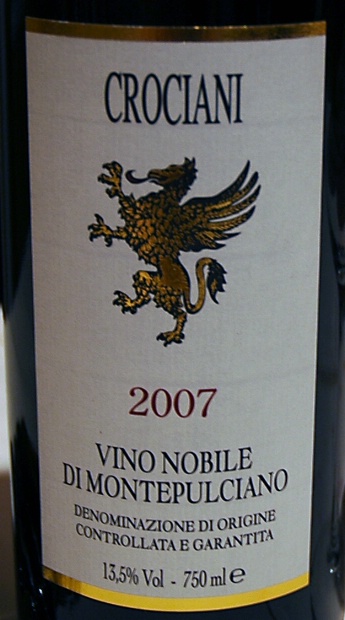
2007 Crociani Vino Nobile di Montepulciano – The nose showed masses of raspberry, cedar, herbs and a bit of older wood. The palate was structured, but not austere, and savory with rich black cherry. The finish coated the palate with fine tannin. This wine would benefit from a few years in the cellar. (91 points)

2008 Crociani Vino Nobile di Montepulciano – It took two hours in decanter before this wine truly began to shine, but it was well worth the wait. On the nose, I found floral notes, sweet spices, dried apple and strawberry. On the palate, it was soft and slightly spicy with plum and a hint of salinity. The finish rounded out nicely with decanting and showed notes of soil and herbal fruit tea. (90 points)

2004 Crociani Vino Nobile di Montepulciano Riserva – The nose showed crushed wild berries, woodland notes and soil. With time in the glass, the bouquet turned darker and richer, as whiffs of sweetened herbal tea and cinnamon stick came to the fore. On the palate, it was elegant with rich red fruits, orange rind, rose petal and notes of beefy broth. The rich red fruit turned to juicy cherry as the wine came together on the finish. This bottle was beautiful and is drinking well now with proper decanting. (93 points)

2006 Crociani Vino Nobile di Montepulciano Riserva – The nose showed red fruits, violets and a hint of toast. On the palate, I found a rich, full-bodied wine, with brambly red fruit and cedar. The finish was smooth and long. (91 points) Find it: Wine-Searcher!

2007 Crociani Vino Nobile di Montepulciano Riserva – The nose showed crushed sour berries, sweet spices and lavender with hints of wood barrel. On the palate, a core of dark red fruit is wrapped in silky tannin with minerals, notes of herbal tea and hints of sweetness on the mid-palate. Red berries linger on the medium long finish. (92 points)

2003 Crociani Vin Santo di Montepulciano – The nose showed intense almond, cotton candy and coffee notes. On the palate, this wine was refined, showing roasted nuts, orange peel and toffee but with less sweetness than I’ve come to expect from Vin Santo. Ultimately, this was a pleasure to drink as it showed remarkable balance and refinement. (92 points)

Visit the Crociani Website.
Find the wines of Crociani on Wine-Searcher!

Friday, February 18, 2011

“The Italian Wine Masters,” Part 3 Vino Nobile di Montepulciano

The Italian Wine Masters is a combined effort between The Consorzi Brunello di Montalcino, Chianti Classico, Vino Nobile di Montepulciano and Conegliano Valdobbiadene Prosecco Superiore. It’s a trade show of sorts, where industry professionals and press are invited to meet the owners and representatives of over 100 wineries from Tuscany and the Veneto, Valdobbiadene wine growing region.

Vino Nobile di Montepulciano

When studying the wines of a country as large and diverse as Italy, you sometimes find yourself prioritizing or turning a blind eye to a specific region or wine from that country. When you consider the amount of wine that comes out of Italy, the number of varietals grown (over 350), and how many variations you can find on each wine from the 20 different wine-growing regions, you start to understand my plight. I am ashamed to say that Vino Nobile di Montepulciano is one of the wines that I choose to overlook. I had tried it once and it simply didn’t impress me… now, I must say, I was a fool.

I believe my first mistake was in expecting something from the wine that would remind me more of Brunello or Chianti. My second mistake was drinking a young wine. And my last mistake was never giving it a second chance… until now.

What impressed me the most about the Vino Nobile at The Italian Wine Masters were the bottles that I sampled in the Sommeliers cellar (which is why I choose to include those notes here). These wines, after ten years of age, were beautifully structured with vibrant fruit flavors and aromas that you don’t find in most Sangiovese wines from Tuscany. Vino Nobile must be made from at least 70% Sangiovese and aged for two years prior to release. The region is located Southeast of Chianti Classico and East of Montalcino. What this all amounts to is a unique expression of what Sangiovese is capable of, in a region that truly deserves more attention.

I would highly recommend searching out the wines of any of these producers. If you must drink them young, I recommend decanting them. If you have the ability to place them in your cellar, you’ll be in store for a treat in years to come.

On to the notes:

2007 Ruffino Vino Nobile di Montepulciano Lodola Nuova – This wine showed a bit of yeast on the nose, like red fruits wrapped in baking breads. On the palate, I found it to be toasty with spiced red fruits and leather. (88 points)

2004 Carpineto Vino Nobile di Montepulciano Riserva – The nose showed animal musk, and candied strawberry. On the palate, this wine showed focused red fruit with polished acidity and structure. It was highly enjoyable yet still tannic and could easily benefit from a few years of cellaring. (90 points)

2007 Crociani Vino Nobile di Montepulciano – The nose showed masses of raspberry, cedar, herbs and a bit of older wood. The palate was structured, but not austere, and savory with rich black cherry. The finish coated the palate with fine tannin. This wine would benefit from a few years in the cellar. (91 points)

2008 Crociani Vino Nobile di Montepulciano – The nose was slightly restrained yet still showing floral notes and ripe strawberry. On the palate, I found plum and holiday spice. The finish was firm with drying tannin. This wine may really shine with a proper decanting. (89 points)

2006 Crociani Vino Nobile di Montepulciano Riserva – The nose showed red fruits, violets and a hint of toast. On the palate, I found a rich, full-bodied wine, with brambly red fruit and cedar. The finish was smooth and long. (91 points)

1999 Crociani Vino Nobile di Montepulciano – The nose showed dried red fruits with undergrowth, hints of green stems and pepper. On the palate, the fruits turned round and sweet as this wine strutted a fine mature structure with flavors of lush wild berries and spice. The finish was fresh and juicy. (90 points)

2001 La Ciarliana Vino Nobile di Montepulciano “Vigna Scianello” – Red berries and a hint of citrus filled out the nose of this wine, as flavors of blackberry, cinnamon and salinity assaulted the palate. It showed great structure and balance leading into a long berry fruit finish. (91 points)

1999 Salcheto Vino Nobile di Montepulciano – The nose showed green stems with sour red fruit and a floral quality. On the palate, this wine was smooth with black raspberry, mineral copper and hints of salinity. (87 points)

2001 Boscarelli Vino Nobile di Montepulciano “Il Nocio” – The nose showed plum and spicy dark fruit. On the palate, I found raspberry but not much else, as this wine faded into a pleasant fruity finish. Although, this wine wasn’t relavatory, I still found it to be enjoyable and likely a great wine for an evening meal. (89 points)

2001 Dei Vino Nobile Montepulciano Riserva “Bossona” – This showed a gorgeous floral nose of violets with crushed wild berries. On the palate, I found rich red fruit on a full structured frame with herbal tea notes and spice. This wine was mouth-filling and it slowly tapered off into a finish of red fruits and dark chocolate. (92 points)

Saturday, February 12, 2011

“The Italian Wine Masters.” Part 1 Brunello di Montalcino

The Italian Wine Masters is a combined effort between The Consorzi Brunello di Montalcino, Chianti Classico, Vino Nobile di Montepulciano and Conegliano Valdobbiadene Prosecco Superiore. It’s a trade show of sorts, where industry professionals and press are invited to meet the owners and representatives of over 100 wineries from Tuscany and the Veneto, Valdobbiadene wine growing region.

The offerings are extensive, spanning five banquet halls within the Hilton on 6th Ave. in NYC. Each table offered multiple wines from the producer’s portfolios, highlighting the most recent vintages. The size and scope of this event is impossible to cover in the seven hours that I was given to peruse the aisles. However, I was determined to try.

In many cases, I had to pick my battles, as I would have needed a second day to have even come close to tasting through all the event had to offer. My priority was to sample a range of wines from each of the regions and attempt to find some of the best offerings. I sincerely apologize to any of the winemakers whose tables I was unable to visit. But, hey there’s always next year, and if nothing else, this report makes for an excellent peak into these new vintages.

What’s more is that I was fortunate enough to have been invited to “The Sommeliers Cellar.” a room where back vintages of many of the attending producers’ wines were being poured. It was a wonderful insight to where these wines are going as they age in our cellars. To taste Sangiovese in its youthful form can be difficult. However, to taste it from a recent vintage and then compare it to that same producer’s bottle, from ten or more years back, shows just how amazing these wines become with age.

Due to the massive amount of tasting notes collected (83 in all), I’ve decided to split them up over the course of the week. And so, without further ado, I give you Brunello di Montalcino.

The Brunello di Montalcino growing region includes Brunello di Montalcino, Rosso di Montalcino, Saint’Animo and Moscadello di Montalcino. Of these, Brunello is obviously the most well known, and with good reason. Brunello has the name, the image and the international branding to keep it on the tongues of collectors, vintage after vintage. Made from 100% pure Sangiovese and aged over a period of four years prior to release, Brunello is able to last and mature for decades in a well maintained cellar. They are big and structured wines that can be almost painful to enjoy in their youth without extensive decanting. However, as I can attest to, Brunello is well worth the wait, as can be seen from my tasting notes of vintages with 10 years or more under their belt.

Rosso di Montalcino was created to allow producers to have an early release wine that can be enjoyed upon release by consumers. These wines can be highly variable, but they can also provide great value and, in some cases, they verge on a quality level that is often referred to as “baby Brunello.”

On to the notes:

2006 Capanna Brunello di Montalcino – The Capanna Brunello di Montalcino is painful to drink in this early stage. The nose showed dark red fruits and hints of barnyard. On the palate, sour red fruit and herbs fought against the tannic structure of the wine but were ultimately shut down as they coated my palate in tannin. This wine needs many years before showing what it’s truly capable of. (90 points)

2004 Capanna Brunello di Montalcino Riserva – The 2004 Riserva showed a gorgeous nose of dusty dark berries with soil and dark woodsy notes. On the palate, this showed remarkable richness yet refinement, as flavors of sour strawberry and spiced herbal tea tantalized the senses. The finish gave way to palate-coating tannin, which should keep the concentration on the palate in check for some years to come. This is a wine that I would choose for my own cellar and will be very happy to enjoy in its maturity. (94 points)

2006 Il Poggione (Proprietá Franceschi) Brunello di Montalcino – The nose showed elegant floral notes against rich red fruits. On the palate, this wine was focused with spicy sweet cranberry yet restrained by its large structure. (91 Points)

2005 Il Poggione (Proprietá Franceschi) Brunello di Montalcino Riserva Vigna Paganelli – The Riserva Vigna Paganelli took the elegance of the noramale, yet added rich dark fruit and wood tones to the nose. On the palate, this wine was big in structure with mouth-filling raspberry fruit fading to an uncharacteristically short finish. (90 points)

2005 Azienda Agricola Le Ragnaie Brunello di Montalcino – The nose of the 2005 Le Ragnaie was beautiful, yet not classic to Brunello in any way, as aromas of floral cranberry were joined by an unmistakable wash of coconut. On the palate, it was light and fresh with red berries, but dry going into the finish. (89 points)

2006 Azienda Agricola Le Ragnaie Brunello di Montalcino – The nose showed manure and saddle leather. On the palate, I found red berries and spicy cinnamon stick. It ended in a simple yet enjoyable finish laden with red fruits. (90 points)

2006 Campogiovanni (San Felice) Brunello di Montalcino - The nose showed ripe strawberry, animal musk and hints of wood. On the palate, I found sour red fruits with a savory round body and hints of salinity, leading to a long structured finish. (91 points)

2005 Il Greppone Mazzi (Ruffino) Brunello di Montalcino – On the nose, I found red fruits and herbs. The palate showed soft, but drying red fruit with hints of cedar and spice. (87 points)

2006 Tassi Brunello di Montalcino – The nose was classic with crushed wild berries, fresh leather and hints of barnyard. On the palate, I found dark strawberry fruit and savory herbs leading to a long red berry finish. (91 points)


2006 Tassi Brunello di Montalcino Selezione Franci – Darker and slightly more elegant that the regular Brunello, the Selezione Franci showed an intoxicating note of cherry pipe smoke on the nose. On the palate, I found a balanced, fresh, yet structured Brunello with rich dark fruits and cinnamon leading into a long cherry laden finish. (92 points)

2005 Terre Nere Brunello di Montalcino Riserva – The nose showed red fruits with earth and a hint of manure. The palate was full-bodied and nicely structured, while showing black cherry and minerals. The finish was medium-long with hints of menthol. (89 points)

2006 Uccelliera Brunello di Montalcino – The nose on the 2006 Uccelliera Brunello di Montalcino was fragrant with dark fruits, lush flowers and undergrowth. On the palate, I found a structured, full-bodied wine with ripe red fruits and spicy wood. The structure continued into the finish and left the palate wrapped in tannin. This should be an interesting wine to follow over many years. (91 points)

Later this week, I’ll be publishing my notes from the Sommiliers Cellar, which will include a number of notes from aged bottles of Brunello di Montalcino. It will be well worth the wait, so check back throughout the week.

The Brunello di Montalcino rundown (by score):
2004 Capanna Brunello di Montalcino Riserva (94 points)
2006 Tassi Brunello di Montalcino Selezione Franci (92 points)
2006 Il Poggione Brunello di Montalcino (91 Points)
2006 Campogiovanni (San Felice) Brunello di Montalcino (91 points)
2006 Tassi Brunello di Montalcino (91 points)
2006 Uccelliera Brunello di Montalcino (91 points)
2006 Capanna Brunello di Montalcino (90 points)
2006 Azienda Agricola Le Ragnaie Brunello di Montalcino (90 points)
2005 Il Poggione Brunello di Montalcino Riserva Vigna Paganelli (90 points)
2005 Azienda Agricola Le Ragnaie Brunello di Montalcino (89 points)
2005 Terre Nere Brunello di Montalcino Riserva (89 points)
2005 Il Greppone Mazzi (Ruffino) Brunello di Montalcino (87 points)

Rosso di Montalcino

2008 Capanna Rosso di Montalcino – The nose showed wild black berries and violets. On the palate, this came across and fresh yet simple with red fruit and slightly astringent tannin on the finish. (87 points)

2008 Il Poggione (Proprietá Franceschi) Rosso di Montalcino - The 2008 Rosso showed crushed wild berries, green stems, white pepper and menthol. The palate was velvety and full with lush red berries and cinnamon, which lasted into the long finish. (90 points)

2009 Terre Nere Rosso di Montalcino – The nose showed dark, older wood with red fruit and hints of chalk. On the palate, I found faded red fruit and wood, which led to a red candied finish. (86 points)

2009 Uccelliera Rosso di Montalcino – The nose showed plum reduction, leather and floral perfume. On the palate, I found spicy red fruits, but the slightest hint of alcohol marred the finish. (87 points)

Sant’Antimo

2007 Tassi Sant’Antimo BAC – The 2007 BAC was an interesting departure after tasting so much Brunello. It showed pomegranate, green stems and chalk dust on the nose. The palate was full and chewy with blackberry fruit, bell pepper and herbal greens. The finish was long and reminiscent of the palate. This was an interesting blend of Cabernet and Petit Verdot, yet I feel that the Cabernet brought too much greenness to this wine. (87 points)