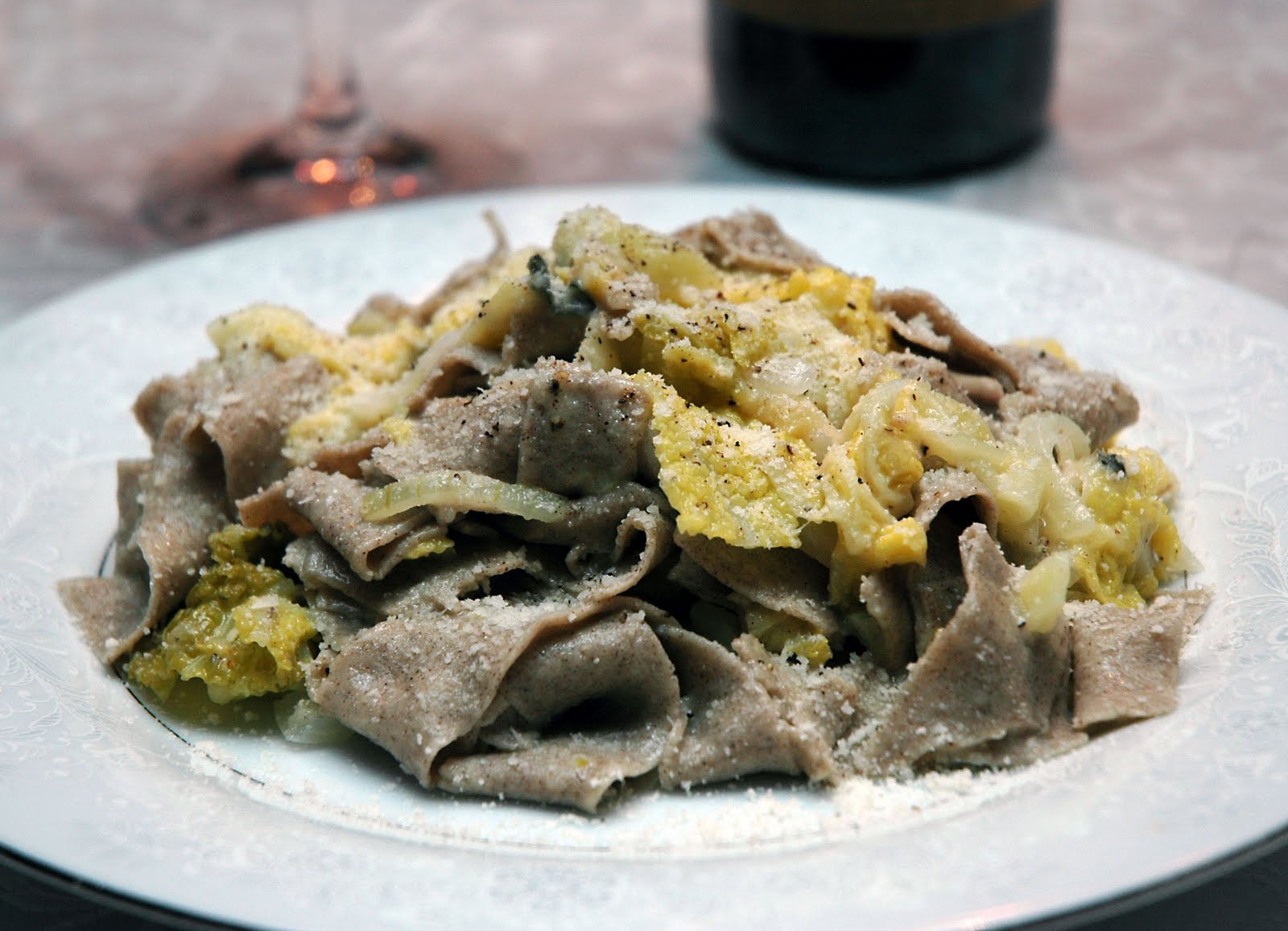
I'm thinking about Italian wine, from north to south, about all of the great reds that come to mind.
Only ten years ago, Barolo, Brunello and a smattering of Super Tuscans, were the handful of wines that could lay claim to international renown. Back then, the wines of Etna were in their infant stages, and Taurasi had proven itself only to the insiders, collectors and Italophiles that took the time to understand and embrace it. Chianti Classico was still associated with pizza parlors, and Barbaresco was nothing more than the little sister to Barolo. However, all of that has changed in recent years. No longer do we need to make excuses for Aglianico in the south, explain the value of Sicily, or make the case for Barbaresco’s unique attributes. As for Chianti, its popularity has exploded, and it’s now giving Brunello a run for its money.
However, there is one wine that you’ve probably heard rumblings of, that hasn’t risen to the occasion, and that’s Sagrantino.
So the question is, why?
This big, gusty, structured red seemed to have everything going for it: hailing from a classic, hilltop medieval village, able to age and mature for decades, and championed by a winery that had won multiple awards for their wines, which put Montefalco on the map.
So why are we not celebrating the elevation of the Sagrantino di Montefalco DOCG into the same company of Barolo, Brunello, Turasi and the like?
In my opinion, it’s not the small size of the vineyards planted, the gripping tannins that Sagrantino is known for, or a lack of marketing. No; in my opinion, it’s the winemaking.

In an attempt to make Sagrantino more palatable for the average consumer, or international consumer, the majority of winemakers continue to age their wines in new oak. Even the world-renowned Arnaldo Caprai winery, and their award-winning 25 Anni, represents what is possible when Sagrantino has been tamed, or sheathed, in a cloak of French Barrique. I consider this to be a horrible shame when you consider that of all of the producers in Montefalco, Caprai should have the raw materials to make some of the greatest expressions of varietal wine in the region. Here we have one of the first wineries to take Sagrantino seriously, going as far back as 1971, eight years prior to the creation of the Montefalco DOC. Caprai brought vineyard analysis and clonal research to a region that was filled with farmers who made local wines for local palates. Their success has a lot to do with why so many other producers continue to make Sagrantino in this “international” style.
However, there is still hope for Sagrantino--I haven’t given up on its ability to produce one of the greatest wines in Italy, and the reason why is Paolo Bea.
Before I get too deeply into how Paolo Bea has proven Sagrantino’s worth to me, let’s first delve a bit into what makes the raw materials in Montefalco so precious in the first place.
Located in the landlocked region of Umbria, Montefalco (or “falcon mountain”) suffers from being surrounded by some pretty serious “wine-related” neighbors. With Tuscany to the northwest, Marche to the northeast, Lazio to the southwest, and Abruzzo extremely close in the southeast, Umbria and Sagrantino compete with the popular Sangiovese, Aglianico and Montepulciano grapes. That said, two things that Umbria has been able to claim fame to are production of top-shelf olive oils and black truffles from Norcia.
However, they also have a perfect terroir for the production of world-class red wine.
The DOC and DOCGs of Montefalco and Sagrantino sit in a basin, surrounded by the Apennines mountains, growing in soils rich in clay with a mix of sand and limestone. However, as you push into higher elevations, rising up to 1500 feet, you’ll also find clay-calcrete, an almost cement-like blend of clay, gravel, sand, and silt, making it difficult for vines to survive, but as they say, the strong always do. The region is warm yet moderated by winds coming down from the Apennines, along with Meditarainan influences carried across the Tiber river.

Sagrantino, renowned for both its deep red color, but also powerful tannins, can be difficult to tame. In fact, going back centuries, Sagrantino’s first leading role was in the production of sweet wines, where their power and broad tannins would be balanced by rich textures and riper fruit developed through Passito (air-drying the grapes). There is also Sangiovese, as Umbria sits in the heart of the Sangiovese belt, producing, what is, in my opinion, a spicier version than their neighbors, with grippier tannins to help set them apart. These two grapes make up the lion’s share of red grapes produced in Montefalco.

The DOC Rosso di Montefalco is composed primarily of Sangiovese from 60-80% with a minimum of 10% Sagrantino and other red varieties. While the DOCG, Sagrantino di Montefalco must be 100% Sagrantino, a grape whose intensity of color is only matched by its intensity of tannic bite--which brings us back to Paolo Bea, one of the few producers I know of that age their wine entirely in large, neutral wood, and yet manage to create wines that require aging, but are also impossible to ignore in their youth. In my opinion, this should be the benchmark of the region.
The Paolo Bea Paradigm
What keeps Paolo Bea flying under the radar is a combination of low quantity, no desire to market themselves, and an unwillingness to submit wines for review to the press, which sounds quite a bit like another producer who I have often compared them to: Giuseppe Quintarelli.
 |
| Giampiero Bea |
The history of the Bea family is closely tied to Montefalco, going back as far as the 16th century. This is a family of farmers who have cultivated olives, grains, vegetables and grapes since the beginning, maintaining a wholly natural ecosystem, which is focused on the fruits that nature provides them. There is no winemaking wizardry and no chemicals in the vineyard or winery. Instead, it’s a complete respect for what each vintage brings to the table, and the Bea family’s desire to bottle that expression, capturing the essence of terroir, without taking anything away. This approach has obviously worked, as vintage after vintage, whether it was warm, dry, wet, abundant, short or simply perfect, presents something pleasurable to the senses. What’s more, supply could never fill the demand that has been created for the wines, and the family has no interest in expanding. Instead, the current generation, represented by Giampiero and Giuseppe, continues to work their 5 hectares of vineyards by hand, choosing to only use only ⅓ of their 15-hectare property for the production of grapes, even though they could easily continue planting to expand. Their vineyards occupy the higher elevations of Montefalco terroir, reaching up to 1500 feet above sea level, and taking advantage of a diverse mix of soils. It’s here that they have begun to vineyard-designate their lineup of Sagrantino, to further accentuate the esteemed terroir of the region.

In the winery, gentle macerations and slow fermentations can last from three weeks to as many as seven, before the wine is placed into steel tanks for a year to rest, and then large neutral wood for up to two years. At this point, the wines are bottled without filtration and extremely low, if any, added sulfur, and left to rest for another year. This process is a long, painstaking effort that is extremely costly to the producer as well, and it results in the 2012 vintage being their current release, seven years after harvest.
 |
| Paolo Bea with his grandson |
However, the proof is in every bottle of Paolo Bea. Don’t get me wrong; this is natural winemaking in the extreme, and as a result you’ll sometimes find some volatility or a large amount of sediment. However, for every slightly off bottle of Paolo Bea, there are ten more that are otherworldly, kaleidoscopic, ethereal examples of what Sagrantino and Sangiovese are capable of from Umbria. The fact is, once you taste a Paolo Bea Sagrantino, you’ll be asking yourself why more producers aren’t trying to replicate their processes. However, just like the wines of Giuseppe Quintarelli, it’s almost impossible to recreate such a perfect union between terroir, wine, and family.
Yet, I wonder why other producers don’t seem open to trying.
Here is the rub: in a time when the majority of consumers are looking for more varietal purity, less “wine making”, and the ability to observe a “sense of place” from each bottle of wine, how can Sagrantino ever become the next great Italian red, as most wineries continue to produce it in a contradictory fashion?
As for Paolo Bea, I’ve been a fan for many years now, going back to the 2003 vintage, and I thought it was about time that I checked in on some of the current releases and maturing vintages, to not only give myself a good idea of where the wines are going, but to also share the results with our readers. I focused on the reds, but it’s also important to mention that Bea excels with white wines as well (a story for another time). It also pays to mention that Bea excels in both warm and cool vintages, lending very different expressions of place, but as I already said--it’s about what Mother Nature gives, not what they make of it.
Enjoy!
On to the Tasting Notes.
The
San Valentino vineyard hosts 50-year-old vines, planted in soils dominated by clay. It sits at 1300 feet altitude and creates Bea’s open-knit expression that is amazing upon release but also matures for up to a decade in the cellar. The composition is 70% Sangiovese, 15% Sagrantino, and 15% Montepulciano.
2012 Paolo Bea Umbria San Valentino - What an incredible bouquet on the 2012 San Valentino. It comes in at 1.5% less ABV than the previous vintage and shows depths of dark, earthy, almost animal-like complexities. Here I found balsamic spice over dried strawberries, with moist dark soil tones, crushed lava stone, dusty dried florals, and hints of brown sugar. On the palate, silky textures flooded the senses with flavors of sour cherry, tangerine, savory spice, and masses of exotic inner florals, as zesty acids made the mouth water, while concentrated tart red fruits and hints of tannin tugged at the side of my cheeks. The finish was long, zesty, spicy, and tart, yet still so energetic, as the wine’s vibrant acids refused to give in to the intensity within. The result was a spellbinding and tactile experience that is impossible not to like, and it’s easily one of my favorite vintages to date for San Valentino. (
93 points)
The
Cerrete vineyard sits at the highest point in Montefalco, between 1300 and 1500 feet above sea level. The soil is clay and limestone-infused with small pebbles from an ancient riverbed, and used to create Bea’s most ethereal yet complex Sagrantino. However, the Bea family also produces the Rosso de Veo from the young vines here. Frankly, you’d be amazed that these are “young” vines.
2011 Paolo Bea Rosso de Véo - It's amazing to think that this is Paolo Bea's "young vine" bottling of the Cerrete vineyard, as it shows so much intensity, yet balance as well. Here I found a rich and seductive bouquet of crushed raspberry, dried cherries, smoke, dried red florals, spice box, hints of undergrowth, and animal musk. On the palate, silky textures unfolded to reveal black cherry, made vibrant through zesty acids, with a mix of spicy florals, tongue-curling notes of tangerine, cinnamon, and some of the best managed Sagrantino tannins I have ever experienced. The finish was amazingly long, as raspberry and cherry tones seemed to linger for two to three minutes, along with sweet and savory spices, minerals, inner florals, and a hint of tannin. This is a gorgeous wine that may have been helped by the warmer vintage, yet it achieved something very special nonetheless. I can't wait to taste the 2011 Cerrete. (
93 points)
The
Pipparello vineyard is a hilltop site in Montefalco at 1300 feet above sea level. The soil is clay and gravel. Here, the Bea family farms varying percentages (depending on vintage) around 60% Sangiovese, 25% Montepulciano, and 15% Sagrantino to produce their Montefalco Rosso.
2011 Paolo Bea Montefalco Rosso Riserva Pipparello - The nose was dark and brooding, as masses of balsamic-infused black cherries, sweet herbs, brown (almost, curry-like) spices, fresh tobacco, and sweet minerals lifted from the glass. On the palate, I found silky textures, which caressed the senses, just as a wave of tart cherry mixed with zesty acids, minerals and tannin set in, creating a cheek-puckering experience. The finish was incredibly long and structured, with continued intensity from the palate, as grippy tannin held firm against notes of tart cherry fruit, black tea, spice, and minerals. Pipparello is a massive and towering wine in this vintage, with a tight finish, yet a lovely note of sweet red berries lingered for minutes on the back palate.
It's a serious "experience wine" that just needs a few more years to come together. I, for one, can't wait to see how it matures. (
94 points)
2008 Paolo Bea Montefalco Rosso Riserva Pipparello - The nose was dark and brooding with masses of dried black cherry and cedar up front; yet beneath it, notes of exotic spice, tobacco, dried flowers, crushed raspberry, and undergrowth gained volume and depth with time in the glass, until they permeated the senses entirely. On the palate, I found soft, silky textures, which seemed to hover on the senses, offset by a tart acid core, yet also complemented by enveloping bittersweet cherry, quinine, spice, and inner earth tones. The finish was incredibly long with saturating dried cherry fruit, sweet inner florals, hints of gruff tannin--yet juicy and fresh, with a note of hard red candies and licorice which seemed to literally last for minutes on the mid-palate. (
93 points)
2005 Paolo Bea Montefalco Rosso Riserva Pipparello - The 2005 Paolo Bea Pipparello Riserva showed a bouquet of ripe crushed cherry and raspberry, infused with dried orange, exotic spice, and dusty sweet florals, before evolving to show undergrowth, savory herbs and hints of animal musk. On the palate, I found soft textures offset by brisk acids, as fleshy, zesty red fruits caressed the senses, giving way to a mix of savory spice and cheek-puckering minerality. The finish was long, with a tart twang of red berry fruit and acids, as hints of lingering tannin faded against a backdrop of inner florals. (
94 points)
2003 Paolo Bea Montefalco Rosso Riserva Pipparello - The nose was dark and savory, showing ripe plum, crushed black cherry, sage, cherry tobacco, balsamic spice, cumin, and hints of licorice. On the palate, silky, yet remarkably fresh textures, gave way to zesty spiced cherry with energizing acidity, sweet and savory spices, herbs, and florals which reminded me of childhood Christmas with hints of lingering tannin. The finish was long and fresh, as zesty acids created a mouthwatering experience, coupled with resonating cherry and spices. It's amazing to think that this is the product of a warm vintage. (
92 points)
The
Pagliaro vineyard is situated at 1300 feet in altitude, and it is dedicated in large part to Sagrantino. This is the location that produces Bea’s flagship Sagrantino.
2012 Paolo Bea Sagrantino di Montefalco Secco Pagliaro - The ‘12 Pagliaro showed depths of red berry fruit with balsamic spice, crushed plum, sweet herbs, black licorice, dark earth, and a hint of volatility on the nose. On the palate, silky textures gave way to concentrated tart black and red fruits, as dark mineral tones, savory spice, and notes of black tea soaked the senses, while mounting tannin quickly dried them out. The finish was long, structured, and almost chewy, showing gripping tannin with lingering dried black cherry, saline minerals, and savory herbs in an imposing expression of Sagrantino. I can only imagine a decade or more until the 2012 reaches maturity, yet I believe it’s worth the wait, as the wine is poised like a bomb waiting to explode. (
95 points)
2011 Paolo Bea Sagrantino di Montefalco Secco Pagliaro - The nose was dark and intense, leaning toward earth tones yet with a massive wave of crushed black cherry to balance it. With time in the glass, cherry seemed to change to ripe strawberry, as sweet spices, smoky minerals, tobacco, and woodland earth tones joined the mix. On the palate, soft, caressing textures washed effortlessly across the senses, with a graceful lift I’ve seldom experienced, showing a combination of both ripe and tart red fruits, herbal tea notes, sweet inner florals, and exotic spice, all kept lively through brisk acidity. The finish was dry and long, exposing the large-scale Sagrantino tannins I had expected, yet there was a soft edge to them here, making the experience both structured yet enjoyable at this stage. Dried black cherries lingered, as well as minerals, a hint of orange citrus, and lovely inner florals, as a sweet note of red candies seemed to resonate for well over a minute. (
94 points)
2005 Paolo Bea Sagrantino di Montefalco Secco Pagliaro - The nose displayed fresh mineral intensity and moist, dark earth tones up front, evolving to show savory brown spices over ripe black cherry, backed by wild herbs and a hint of animal musk. On the palate, velvety textures flooded the senses with waves of dark red fruits, yet firmed up as brisk acids settled in, unveiling savory herbal tones and a tart twang of peppery spice; yet through it all, grippy tannin slowly gained strength. The finish was long and structured, yet its resonating acids allowed the '05 Pagliaro to sign off on a "early maturity" note, as lingering cherry and spice slowly faded amidst dried inner florals. (
94 points)
Credits and Resources
Article, Tasting notes and bottle photos by Eric Guido
Special thank you to
Rosenthal Wine Merchants, and Blake Johnson for use of family and vineyard photos.
Click to visit the official
Paolo Bea website.